
Living on the Northern Beaches, we know how important an outdoor space is. Your deck isn’t just an add-on – it’s where life happens. Morning coffee with the sunrise, weekend barbecues with friends, quiet summer evenings relaxing. But when you’re planning your deck, one question always comes up: should you go with classic straight boards, or is there a pattern that’ll make your space stand out?
The pattern you choose for laying your decking boards can completely transform how your space looks and feels. We’ve built decks using six different board patterns over the years, and each offers its own advantages. Some patterns make spaces appear more expansive, while others add visual texture, and certain layouts are simply more efficient to install. Let’s walk through the options so you can figure out what works best for your outdoor space.
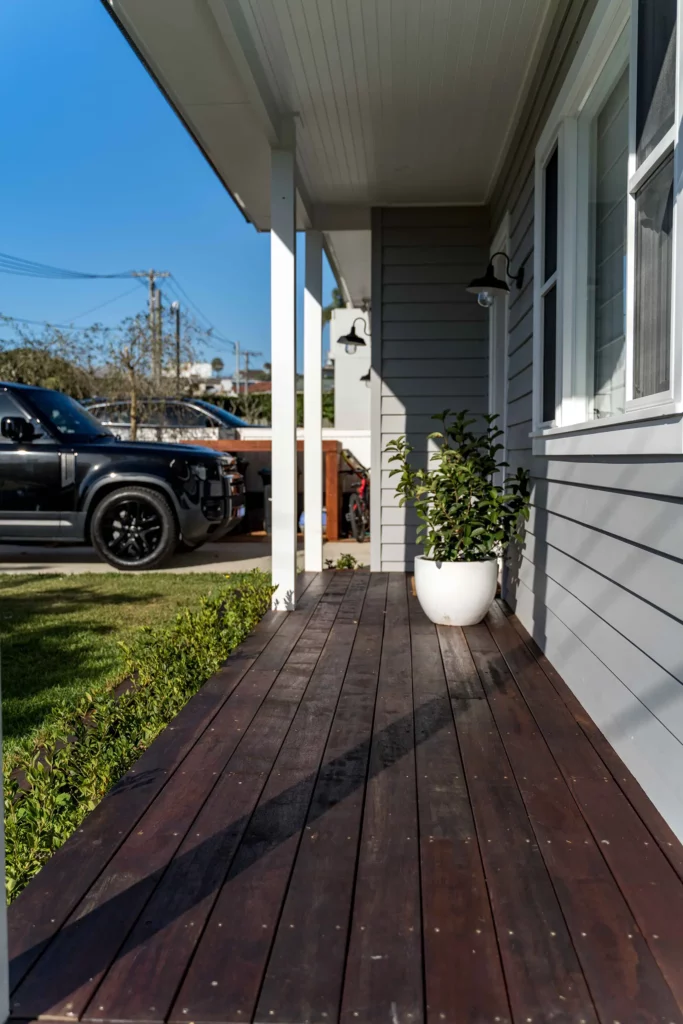
1. Straight (Horizontal) Decking Pattern
The straight layout is the most popular choice amongst Australian homeowners – and for good reason. Deck boards run parallel to your house (or the deck’s longest edge), with support joists spaced 400mm apart running perpendicular underneath. It’s not only the easiest pattern to install, but also the most cost-effective option per square metre.
This straightforward approach optimises both material usage and installation time. Each board gets fastened at every joist with screws, nails, or hidden fasteners, creating a clean, uninterrupted look that works with virtually any home style.
What makes this pattern particularly clever is how you can use the board direction to your advantage. Running boards parallel to your house can make narrow spaces feel wider, while the clean lines help your deck blend seamlessly with its surroundings rather than competing for attention.
Best for: Budget-conscious builds, first-time deck owners, modern or minimalist homes, narrow spaces that need to feel wider.
2. Diagonal Decking Pattern
A diagonal pattern transforms your deck from ordinary to extraordinary. Boards are installed at a 45-degree angle, creating dynamic lines that draw the eye outward and add instant visual interest. Beyond the striking appearance, this layout actually makes your deck stronger and more stable.
The trade-offs? You’ll need closer joist spacing to support the angled boards properly, and expect about 15% more materials due to cutting waste. Installation takes longer too, with more precision cuts required throughout the job.
For larger decks, diagonal installation can actually work in your favour by reducing the number of joints needed. The result is a sophisticated finish that can emphasise views or guide how people move through your outdoor space.
Best for: Statement decks, design-focused homes, larger outdoor areas, homeowners wanting something beyond basic, decks where views or foot traffic flow matter.
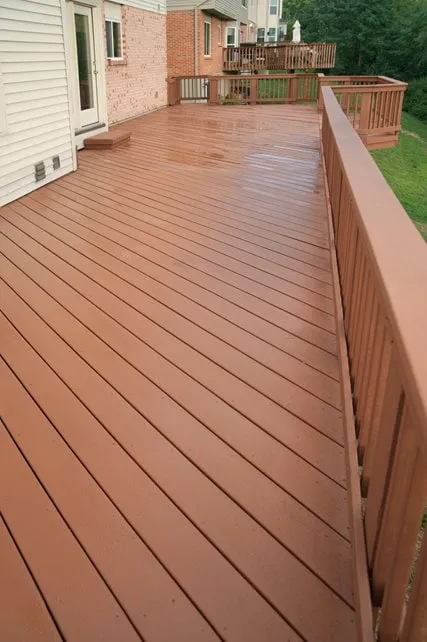
Image: landscapingnetwork
3. Picture Frame Decking Pattern
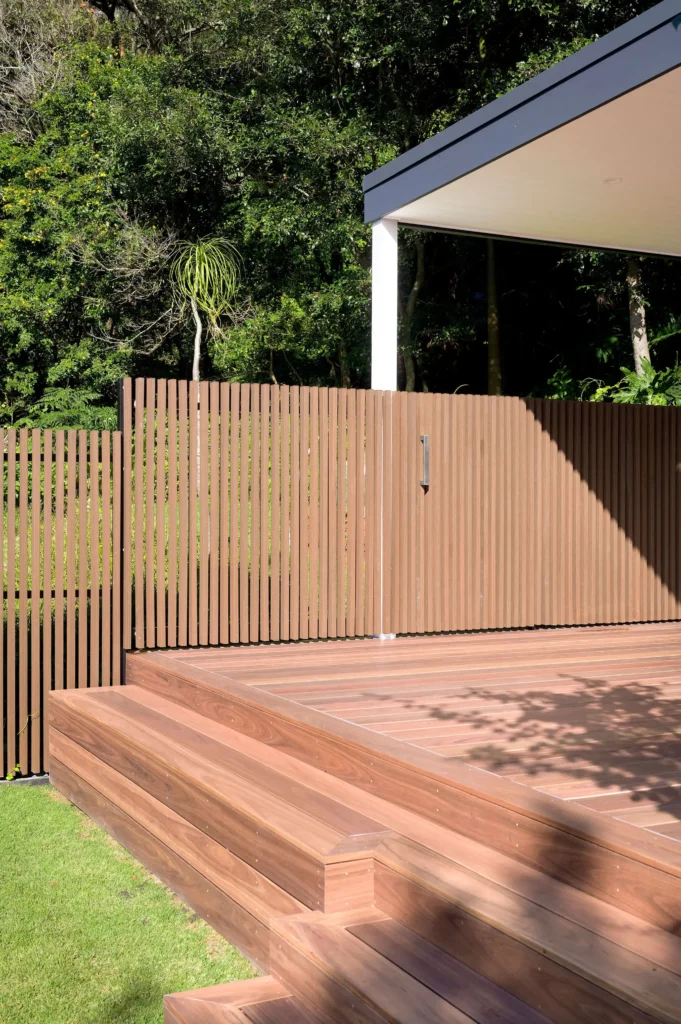
The picture frame layout adds an instant touch of sophistication to any deck. Border boards run around the perimeter, perpendicular to your main deck boards, creating a clean frame that contains the entire pattern (just like how a picture frame surrounds a painting).
This simple addition makes your deck look intentionally designed rather than just functional. The border creates a visual boundary that gives the whole space a more finished, professional appearance. For an even bolder look, you can use contrasting timber colours between the frame and main boards.
From a practical standpoint, the perimeter framing helps protect the edges of your main boards, which can be particularly valuable in coastal areas like here in the Northern Beaches where salt air takes its toll.
Best for: Homeowners wanting a premium look, coastal properties, decks that need clear visual boundaries, anyone adding contrasting timber features.
4. Herringbone Decking Pattern
The herringbone pattern has been a symbol of luxury since ancient Roman times. Boards are arranged in a distinctive V-shaped zigzag that creates a woven, almost textile-like effect across your deck surface. This intricate texture helps make smaller spaces appear larger while giving your deck a lavish feel that looks genuinely expensive.
Beyond the visual appeal, the interlocking design actually makes your decking more durable and resistant to shifting – so you’re getting both beauty and performance.
However, herringbone requires significant subframe upgrades to support the complex angles, considerably more materials, and much more installation time than simpler layouts. The pattern works best on straightforward deck shapes where it can be the hero feature without competing against complicated edges or multiple levels.
Given the complexity involved, we’d strongly recommend working with an experienced Northern Beaches deck builder who has a track record with intricate patterns like this one.
Best for: High-end projects, statement entertaining areas, homes with traditional or luxury architecture, homeowners who want something genuinely unique.
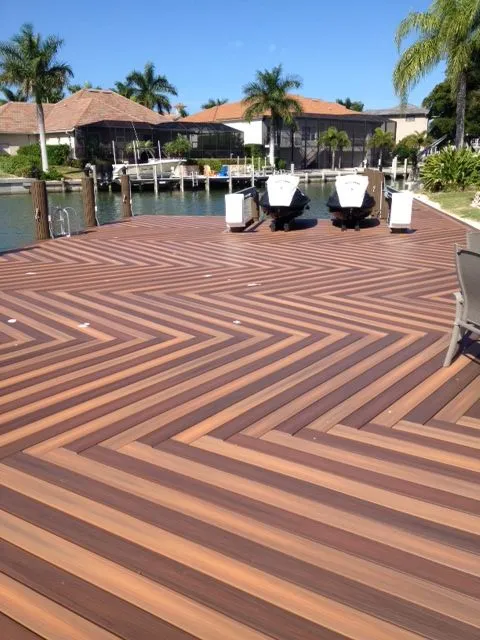
Image: fiberondecking
5. Staggered Board Decking Pattern
The staggered pattern takes inspiration from classic brickwork, with deck boards joined end-to-end in an alternating, offset layout across your deck surface. Instead of lining up all your board joints in straight rows, you deliberately stagger them to create visual rhythm and break up what could otherwise be monotonous long lines.
This approach has practical benefits too – it maximises material usage by letting you use shorter off-cuts that might otherwise go to waste, giving your deck that authentic, handcrafted character. When done with consistent spacing and careful planning, the same technique can look surprisingly modern and works well with a wide range of home styles.
It’s an ideal middle ground if you want something more interesting than straight boards but aren’t ready for the complexity and cost of diagonal or herringbone patterns.
Best for: Budget-conscious builds wanting character, homes with rustic or craftsman styling, DIY builders, decks where material efficiency matters.
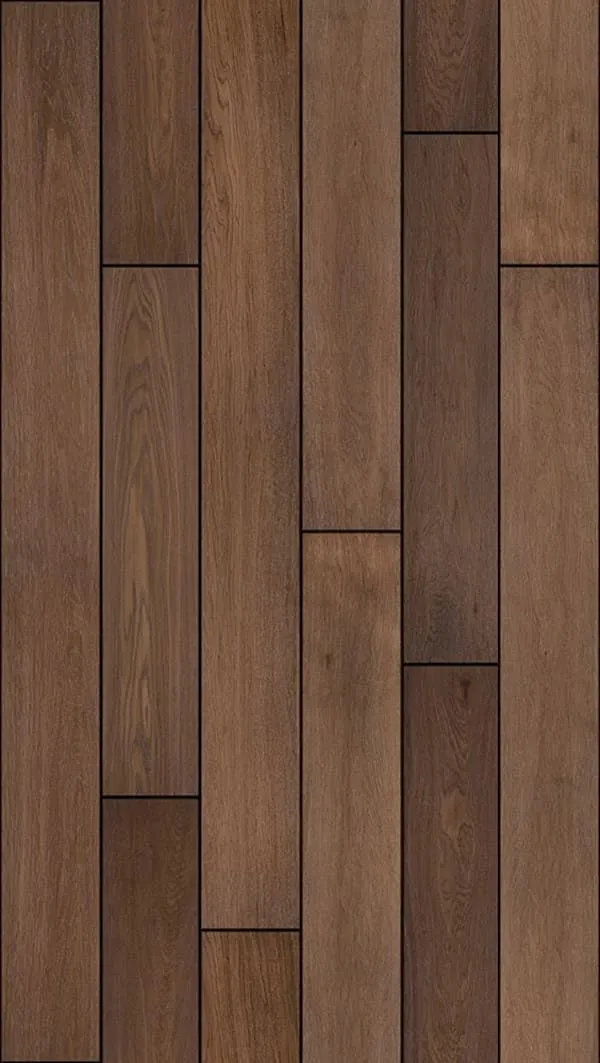
Image: archivetextures
6. Transition Board Decking Pattern
Transition boards create deliberate breaks in your decking pattern to define different zones, change board directions, or introduce contrasting colours. Think separating your dining area from a lounge space, switching from horizontal to diagonal patterns, or adding a bold two-tone colour scheme.
This technique works particularly well on larger decks where you want to break up long stretches or create visual interest through intentional design changes rather than one continuous pattern.
Best for: Large decks needing defined zones, homeowners wanting custom colour combinations, decks connecting different outdoor areas, anyone seeking a more architectural look
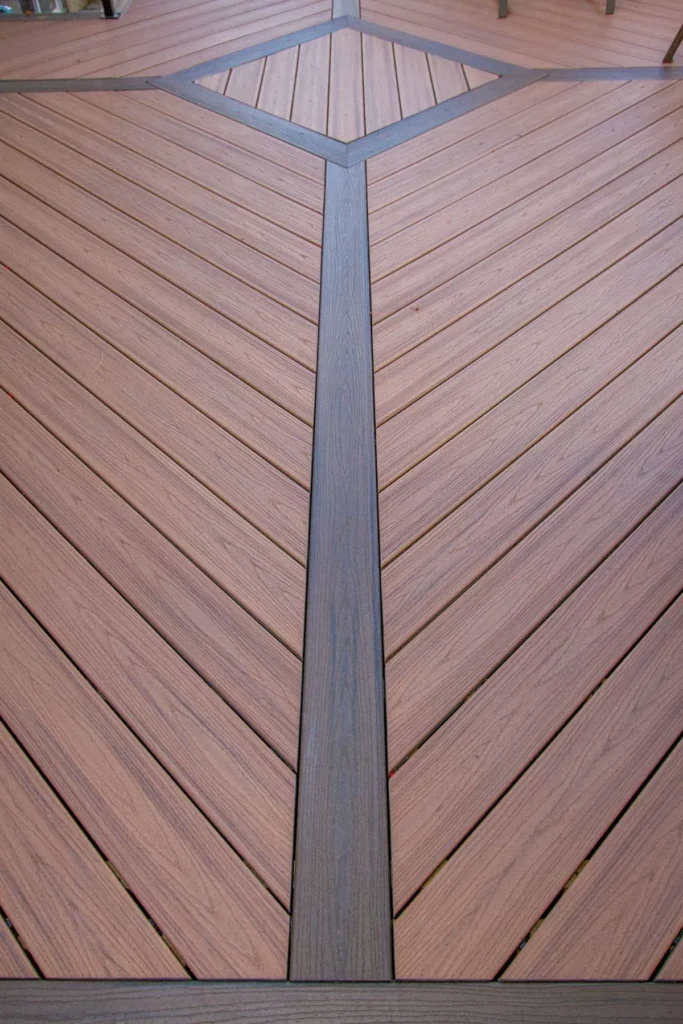
Image: paramountcustomdecks
Choosing the Right Deck Pattern
Whether you’re wanting to use composite decking or traditional timber, selecting the right pattern comes down to how you plan to use the space, your home’s architectural style, and your budget.
A simple straight layout might be perfect for relaxed family entertaining, while a herringbone pattern could be the statement piece that transforms your outdoor space into something extraordinary. The key is finding the right balance for your specific situation.
At HMS Projects, we’ve helped countless Northern Beaches homeowners bring these visions to life over the years. We understand the unique challenges of coastal living (from salt air to summer entertaining) and how to create outdoor living spaces that not only look great but stand the test of time.
Ready to explore what’s possible for your deck? Let’s discuss your project and find the perfect pattern for your space.